Need sewer line repair in Sacramento?
Request a callback to check provider availability, or send a request and a local provider can follow up with you.
No obligation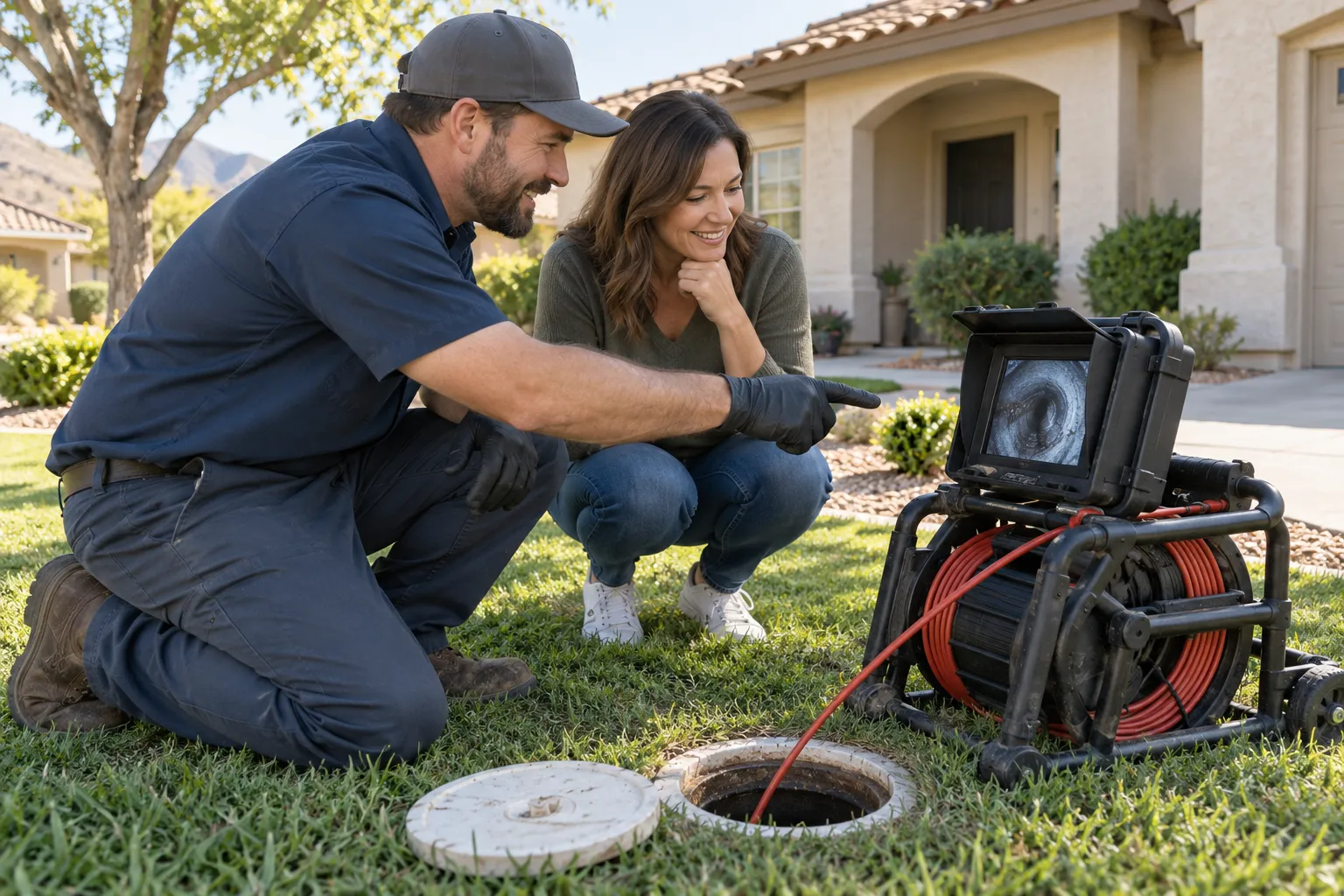
A main sewer line carries all the wastewater from your home out to the street or septic system. When it cracks, clogs or collapses, waste has nowhere to go. It can back up into the drains on the bottom floor of your house. That is a health risk and a big disruption for a busy family.
Princesswas Plumbing is a referral service. We do not do the repair work. We connect homeowners in the Sacramento area with independent local providers who inspect, clear and repair sewer lines. This page explains what to do first, what the warning signs are, how repairs work, and how to keep good records so estimates and any insurance talk go smoothly.
Sewage in a tub, shower or floor drain is a health risk. Stay calm. Work through the steps in order.
When the area is safe, Request a callback to talk with a local provider about the next step.
Some signs are loud. Others are quiet and easy to miss in a busy week.
One slow sink is often a local clog. Several slow drains at once point to the main line. That is when blocked pipe services and a camera look make sense.
Roots search for moisture. Tiny cracks and joints let them in. Over a few seasons they can fill a pipe. Long dry spells make roots reach even harder.
Many 1950s to 1980s tract homes and older bungalows have clay, cast iron or fiber pipe. These can crack, sag or flake with time.
Soil moves after heavy winter rain, then dries out again. Slab homes and raised foundations can see pipe joints pull apart.
Grease, wipes and other items build up on rough pipe walls. Emergency drain clearing may open the line, but the cause can stay behind.
A good provider looks before they dig. Many use a small camera on a flexible cable. It runs through the line and shows cracks, roots, sags and breaks on a screen.
They may also locate the exact depth and spot of the problem with a locator tool. Ask to see the video. Ask for a copy if you can. It helps with a second opinion and with your records.
The right fix depends on what the camera shows. Ask the provider why they picked it.
If roots or buildup are the only problem, a provider may cut or flush the line. This can be a short-term fix if the pipe is damaged.
One broken section can be dug up and replaced. This works when the rest of the pipe is in good shape.
A resin liner is placed inside the old pipe. It means less digging, which helps with yards, driveways and patios.
If the pipe is crushed, badly offset or failing along its length, a new line may be the safer long-term fix.
Most sewer work needs a permit, and some needs an inspection. Rules vary by city and county. Providers in our network usually know the local steps, but ask who pulls the permit.
Also ask where your part of the pipe ends. In many places the homeowner owns the line from the house to the connection at the street. In others the city owns part of it. Check before you agree to a repair.
This habit saves time and stress. Before anything is moved or cleaned, take:
Some policies may cover sudden damage, but many do not cover wear or root damage. Check your policy. Providers can often help document damage for a claim.
Sewer work can mean noise, trucks and a dug-up yard. Ask for a plan that fits your week.
Many providers can respond quickly, but timing depends on the job. Request a callback to check provider availability.
Get a written quote before work starts. If the number feels high, a second opinion is reasonable.
A small camera shows cracks, roots and sags inside the pipe before anyone digs.
Emergency drain clearing can open a blocked main line so water can leave the home.
A broken section can be replaced while the rest of a sound pipe stays in place.
Badly damaged lines may need a new pipe, installed by a provider using proper permits.
Prices vary a lot by pipe depth, length, access and local rules. These are typical U.S. ranges only. Always ask for a written quote that lists the scope of work before you agree.
| Item | Typical range | Notes |
|---|---|---|
| Camera inspection | $100 – $500 | Often worth it before any digging |
| Main line clearing | $150 – $600 | Short-term if the pipe is damaged |
| Hydro jetting | $300 – $1,000 | Washes out heavy buildup and roots |
| Spot repair | $1,000 – $4,000 | Depends on depth and access |
| Pipe lining | $3,000 – $12,000 | Less digging, depends on length |
| Full line replacement | $4,000 – $25,000 | Long runs and hard surfaces cost more |
Stop using drains, turn off the main valve if water is rising, and keep everyone out of the wet area.
Photograph the damage and write quick notes before anything is cleaned or moved.
Request a callback to check availability, or request an estimate through the form.
Ask for a written scope, compare options, and plan the work around family.
Clear do and do-not steps help you protect your family before anyone arrives.
We connect you with independent providers who know the pipes, soil and permit rules near you.
Photos and notes make estimates clearer and can help any insurance conversation go smoothly.
You compare estimates and decide. Independent providers do the work, not Princesswas Plumbing.
Request a callback to check provider availability, or send a request and a local provider can follow up with you.
No obligationCommon signs are slow drains in several rooms, gurgling toilets, sewage smells, and wet or sunken spots in the yard. A provider can run a camera through the line to confirm what is wrong.
Yes, it is a health risk and can damage floors and walls. Stop using water, keep people away, take photos, and contact a local provider. Many providers can respond quickly, but availability varies.
It depends on your policy. Some policies may cover sudden damage, but many exclude wear or roots. Check your policy and keep photos and notes. Providers can often help document damage for a claim.
Request a callback to check provider availability, or send a request and a local provider can follow up with you.
No obligation